

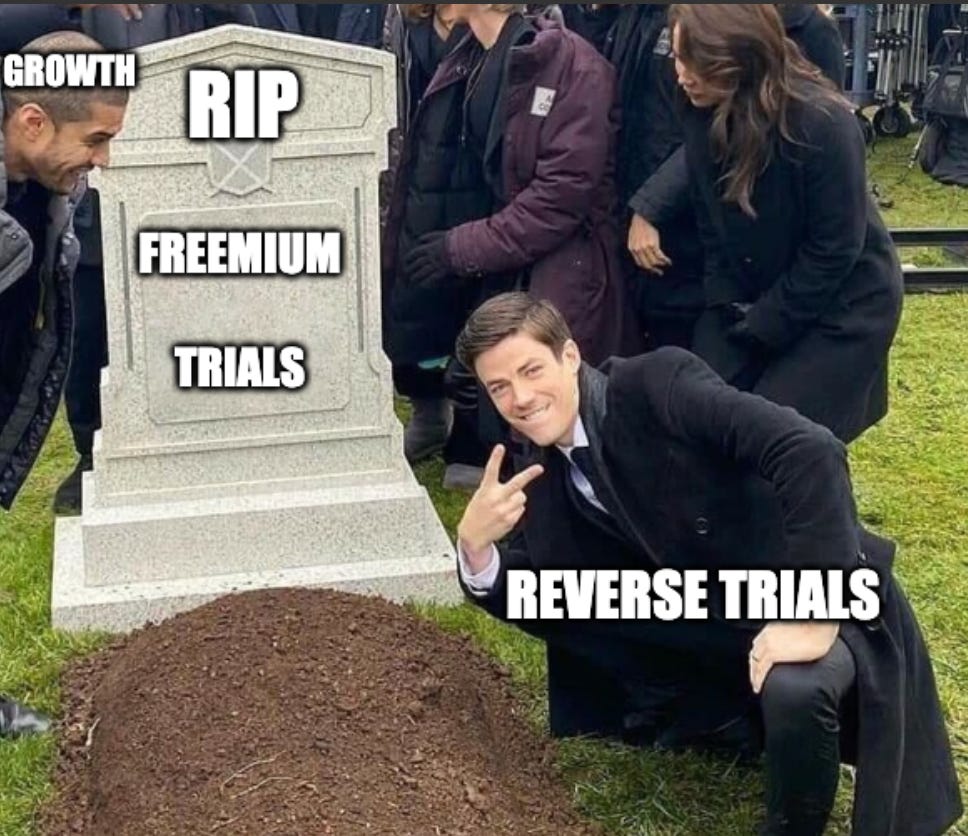
Companies often find themselves wrestling with the choice between offering a Trial or adopting a Freemium model. My take? Opt for neither, because Reverse Trials are simply.. better.
Trials are a great way to convert customers from free to paid. But traditional trial methods, especially those that require a credit card upfront, can slow the top of your funnel by deterring potential users at the very start, often hindering early engagement and leaving customers feeling shortchanged when the trial isn't long enough.
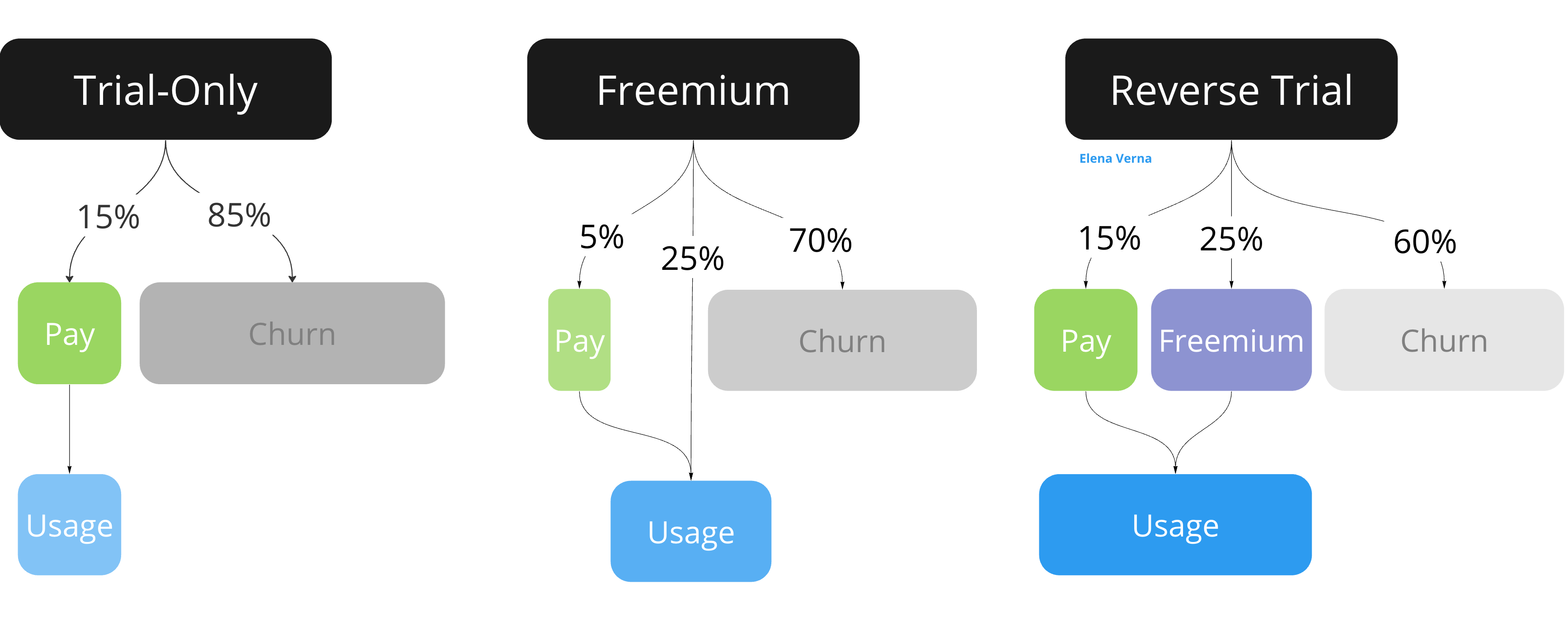
Conversely, pure freemium models draw in a large number of initial users and encourage high product usage, but they typically struggle to convert free users into paying customers—even the best performers see only a 5% conversion rate.
The Reverse Trial strategy ingeniously combines the best aspects of both approaches. It starts every new signup on a trial—usually without needing an opt-in or a credit card—and gives customers access to all or a select set of paid features. After the trial ends without a payment being made, users are smoothly transitioned to a freemium plan. This hybrid model aims to maximize the conversion-driving power of trials while also leveraging the widespread engagement typical of freemium models. By blending the urgency of trial-based models with the broad accessibility of freemium plans, Reverse Trials could significantly boost user acquisition, engagement, and conversion, and even turbocharge growth loops with sustained freemium usage. It's like enjoying your cake and eating it, too—except with software, where there are no calories, only conversions!
The comparison between the flows ends up looking something like this:
Let’s examine a few Reverse Trial experiences!
Canva
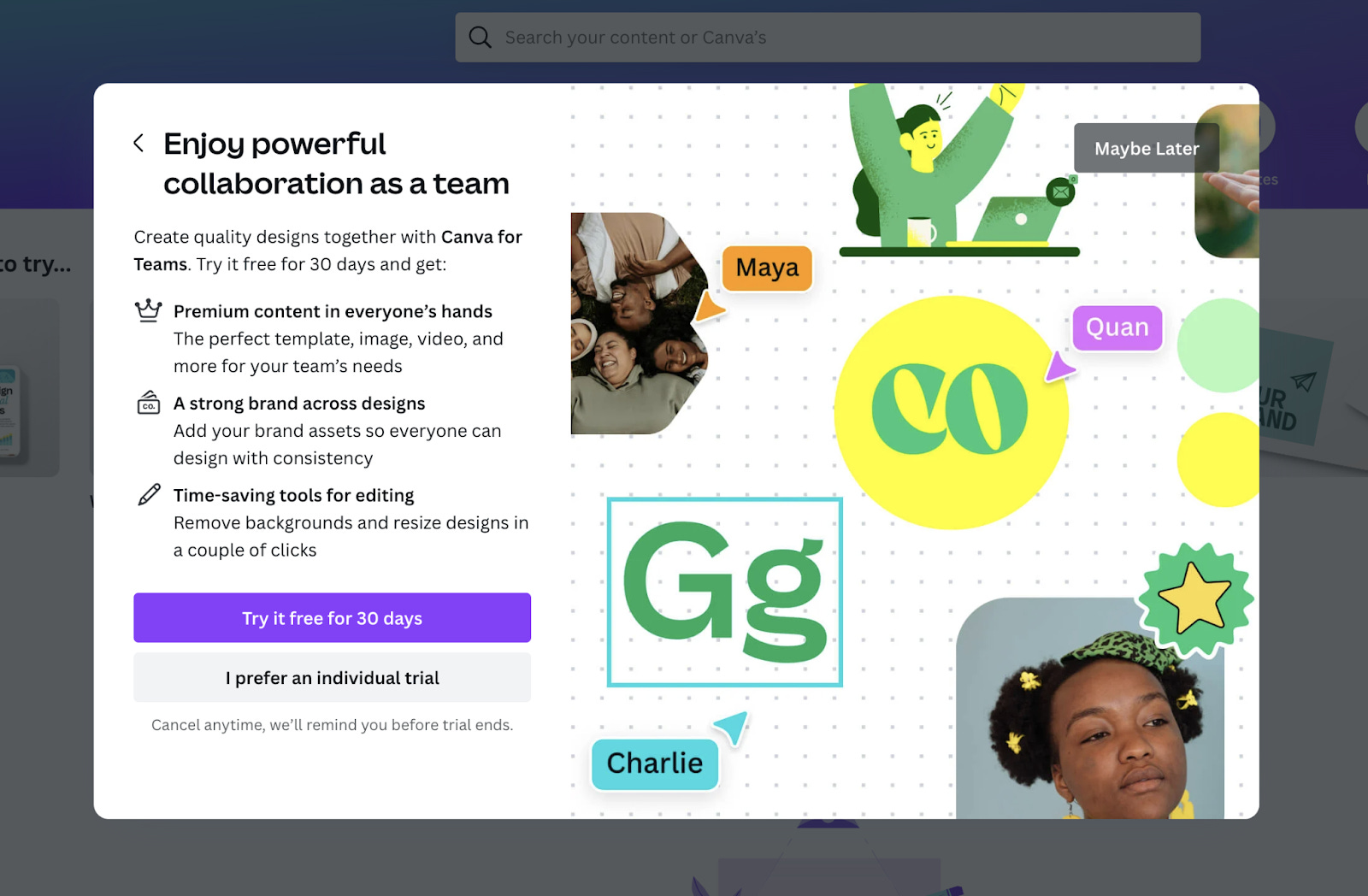
Canva profiles every new signup for intent, and below is an example of selecting the 'work' use case.
The modal below is served as a splash screen on top of the in-app dashboard when the user completes onboarding. I love that it defaults me to a team offering but gives me an individual trial ‘escape hatch’. Note that there is no way to start here *without* a trial. The three biggest reasons to upgrade are listed clearly, and I like the reassurance about keeping me posted on the trial timeline.
Asana
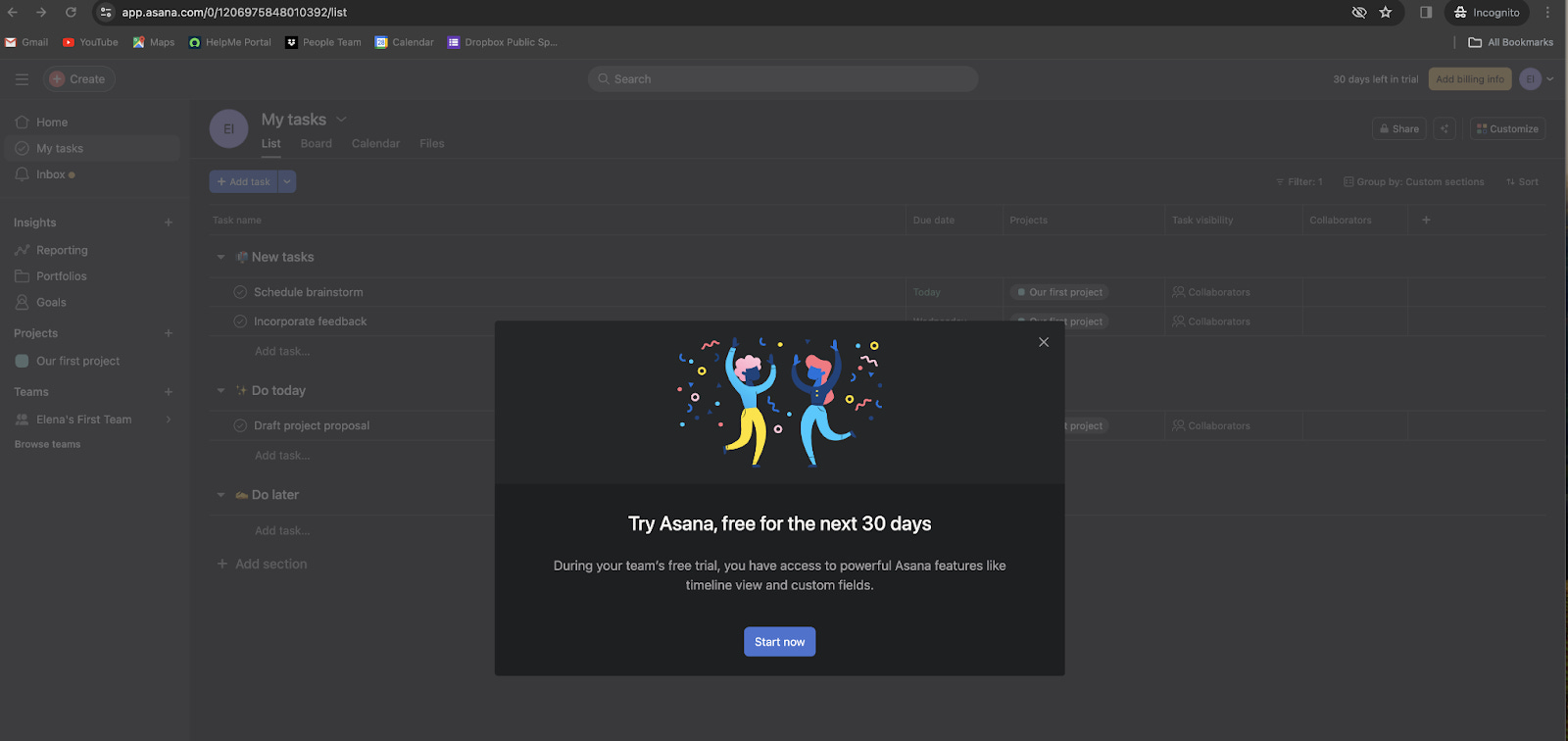
Asana profiles new signups too and then lands them in-app with this splash modal, letting them know about their 30-day paid trial. Again, no escape—trial or bust! I do wish they told me what I'm getting compared to the free version and which plan I'm trialing, but overall, it must work for them!
Notion
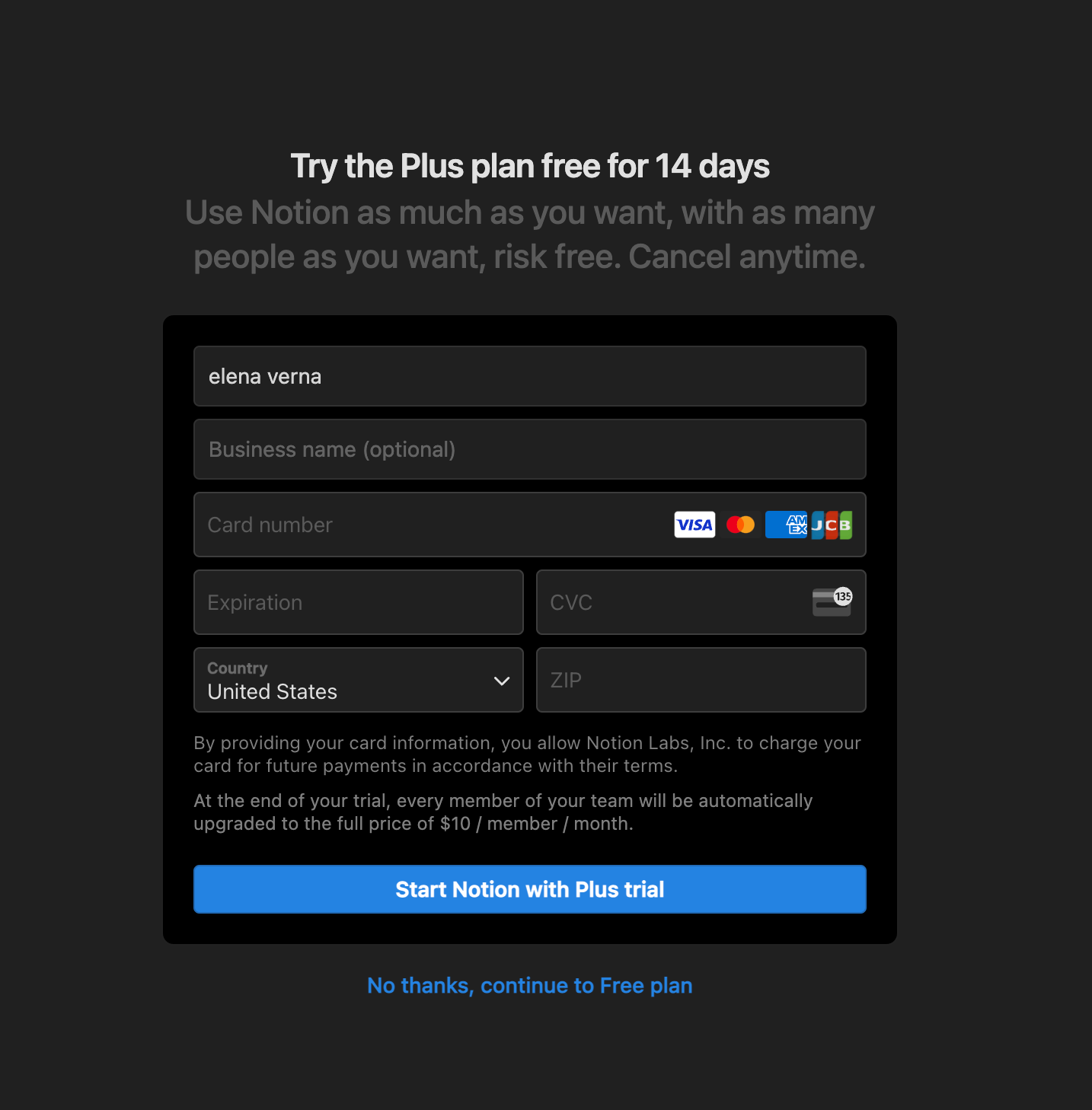
Notion takes a more conservative approach, asking for a credit card as part of their reverse trial. I do wonder if this is because of how I answered the profiling quiz (I said I’m an Exec at an enterprise company). Because it is a credit card-required trial, the escape hatch is there to just continue with freemium. I do wish they talked about the difference between free and paid, though…
Airtable
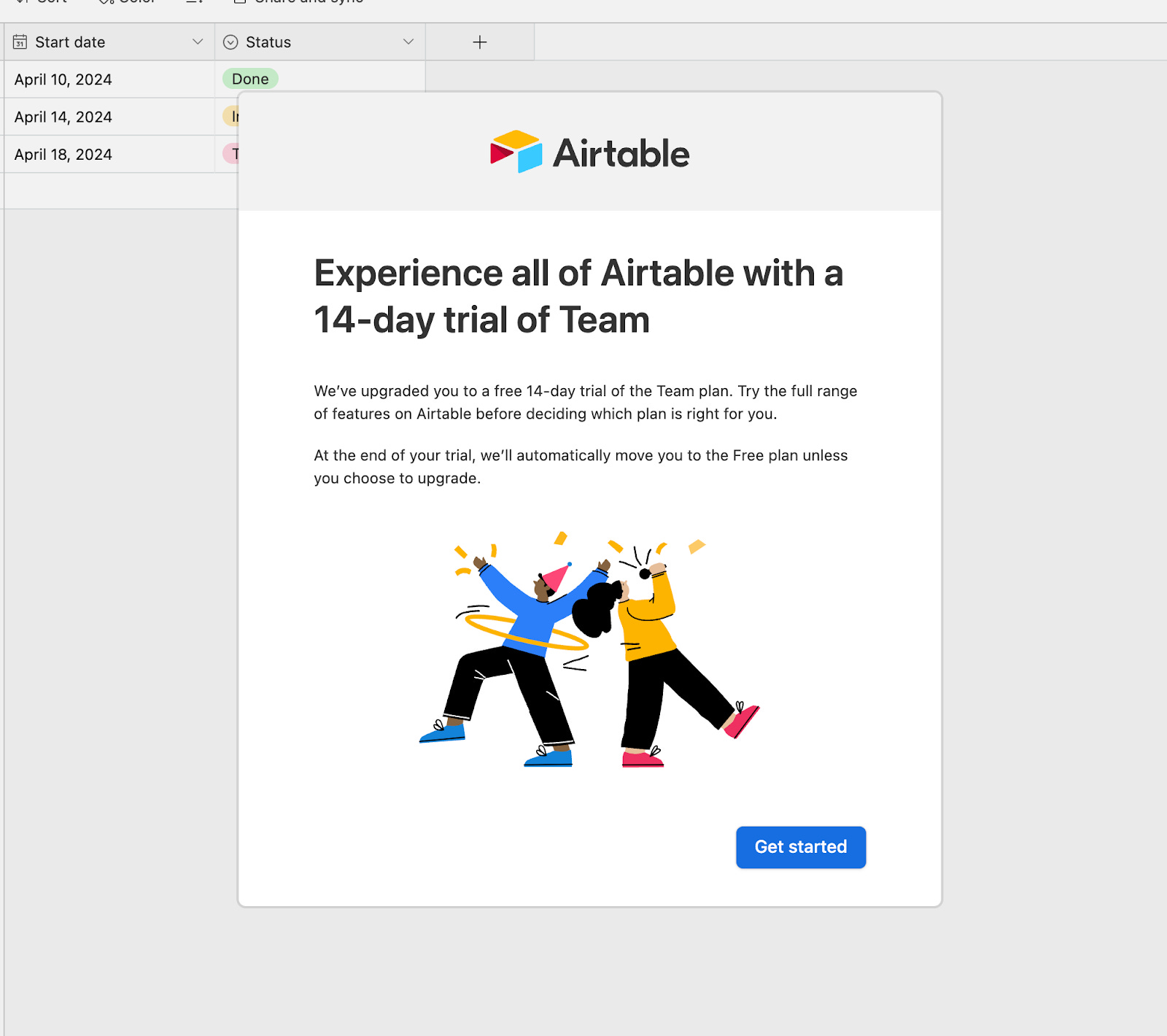
Airtable drops you into a 14-day Reverse Trial for a team experience after profiling. They even educate a customer with crystal clear Reverse Trials definition in the modal: ‘At the end of the your trial, we’ll automatically move you to the Free plans unless you choose to upgrade’. I only wish they gave some benefits, the way Canva does.
And Dropbox, you might ask?
I work there after all :)
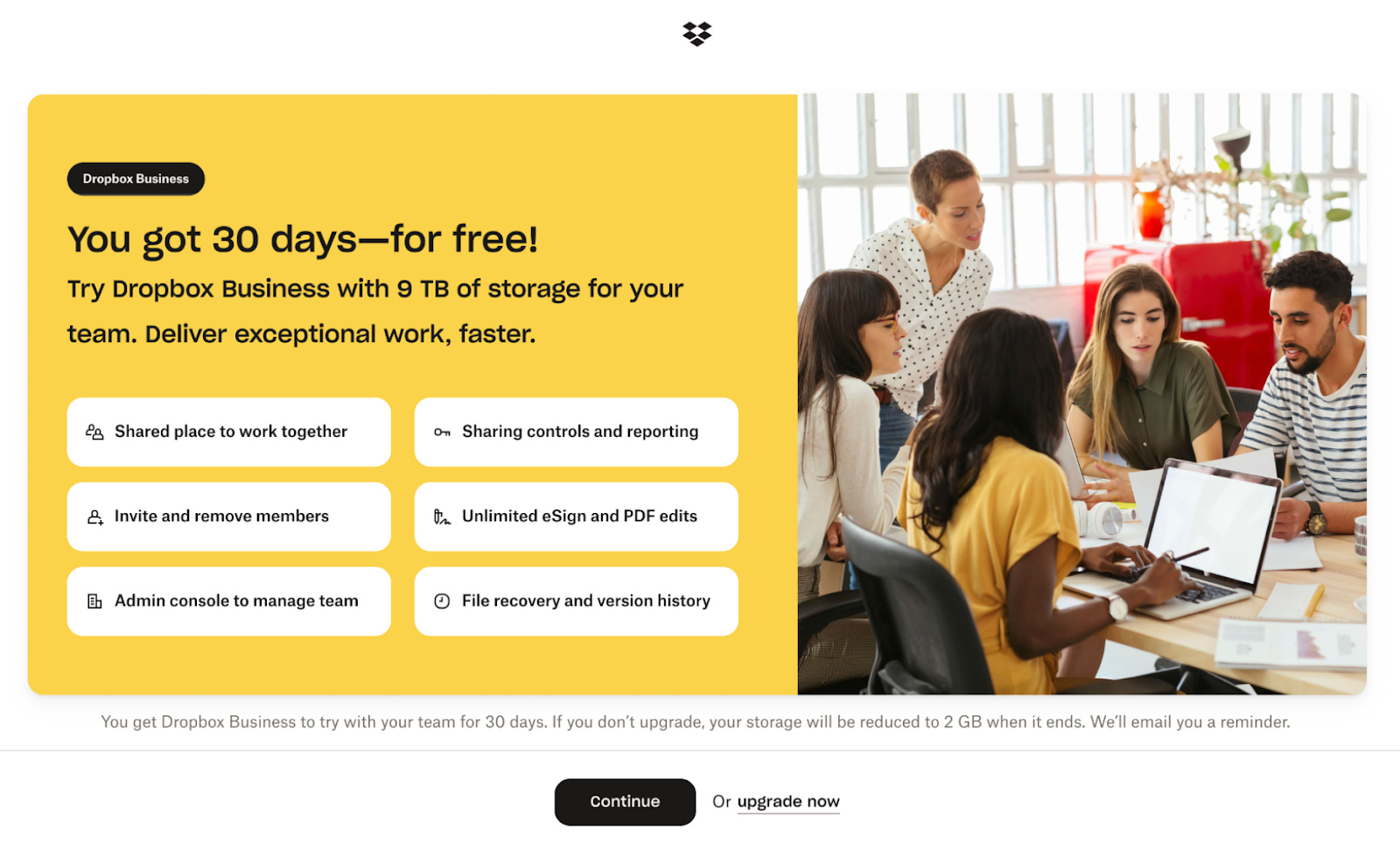
Well, we are still AB testing Reverse Trials right now. After we profile folks, we drop them into our version of a Reverse Trial splash screen:
Keep calm and Reverse Trial on!
Edited with the help of Jonathan Yagel, who has an amazing blog too.
I was waiting for it! 💜 Thanks for collecting examples from favourite products — now have I even more have stuff to read over weekends 🤓
I’m a total fan of this model both as a user and a marketer. If people love the product, FOMO can be a powerful motivator to keep them on a paid plan.