

If you have an Internet connection, you probably saw Matt Shumer’s “Something Big is Happening” essay. If you haven’t, go read it. It’s a warning that AI progress is accelerating faster than most people realize and that the gap between those who adapt and those who don’t is about to become painfully obvious. Most importantly, it argues that most people are not ready for what’s coming.
I agree with the core premise of his article. Disruption is coming, and it’s going to be massive. But I think most people are framing the conversation the wrong way. Everyone is stuck debating whether AI will take their job. The answer is almost certainly yes (I know, I know - it’s terrifying). That part isn’t interesting anymore.
The more important question is this: What if this is also the biggest opportunity of your career?
Right now, there’s a short window where individuals can get absurdly far ahead by becoming AI-native. Not “AI-aware.” Not “occasionally uses Claude.” AI-native. And that window is measured in months, not years.
Who should actually be scared?
It’s a terrible time to be a company or an exec. But it’s a great time to be an individual contributor.
If you’re a founder/ceo or exec running a bloated, slow-moving org that spent decades layering process, coordination, and middle management to handle complexity AI is about to flatten, you should be sweating. Companies that need 26 meetings, four approval chains, and a Gantt chart from 2019 to ship a button color change aren’t careful. They’re exposed.
At this point, many companies are only alive because of distribution, network effect, or data lock-in. The product itself is no longer the moat.
But if you’re an individual stuck in a role you don’t love, underpaid, boxed in, spending your days in meetings that accomplish nothing, writing docs nobody reads, and waiting for your ideas to get prioritized on someone else’s roadmap, the bad news for them might actually be the best news for you.
The demand for AI-native employees is exploding. Not in some abstract, future way. Right now. Companies are starting to care less about fancy titles, perfectly laddered careers, and padded resumes, and more about who can actually get things done in this new environment. People with good taste, real business sense, and, most importantly, high drive. In the next year or two, I’m convinced being AI-native plus those qualities will matter more than years of experience, brand-name logos, or titles that only made sense in a slower world.
Let me make this concrete
At Lovable, we have a Slack channel called #feedback where anyone can post things that feel broken or annoying in the product. Normally, devs would jump in and fix them.
But lately, I started noticing something different.
Instead of devs writing the fixes, I kept seeing messages like, “Hey Cursor, fix this” or “Claude Code, can you handle this?” And then… the fix would just happen. A PR would appear. A quick human review later, it was live.
So next time I was ready to post in the channel (CTA button had the wrong color), I had a wild thought: could I fix this myself?
I don’t have an engineering background. I didn’t even have a GitHub account. But I remembered a teammate (Benjamin) I’d seen do this, so I asked him to show me how it worked. He helped me set up GitHub, Claude Code, and Cursor.
I took a screenshot of the button, told Cursor what was wrong, and asked it to fix it.
It immediately found the issue, fixed it, and opened a PR. The engineer reviewed it and merged it.
I had just “written” code to production. In minutes. Something that would normally take tickets, meetings, and weeks of waiting… I just did it. Not because I became an engineer, but because the gap between intent and execution collapsed.
Honestly, it felt like the biggest unlock for me since discovering Lovable. Equal parts excitement, an undeserved sense of superiority, and just enough danger to be intoxicating.
For individuals, this is leverage. And it’s happening right now.
This post is brought to you by Salespeak’s free new tool, IsYourWebsiteReady.ai:
AI agents influence buyer decisions without triggering analytics sessions.
ChatGPT. Claude. Perplexity. Already accessing your site.
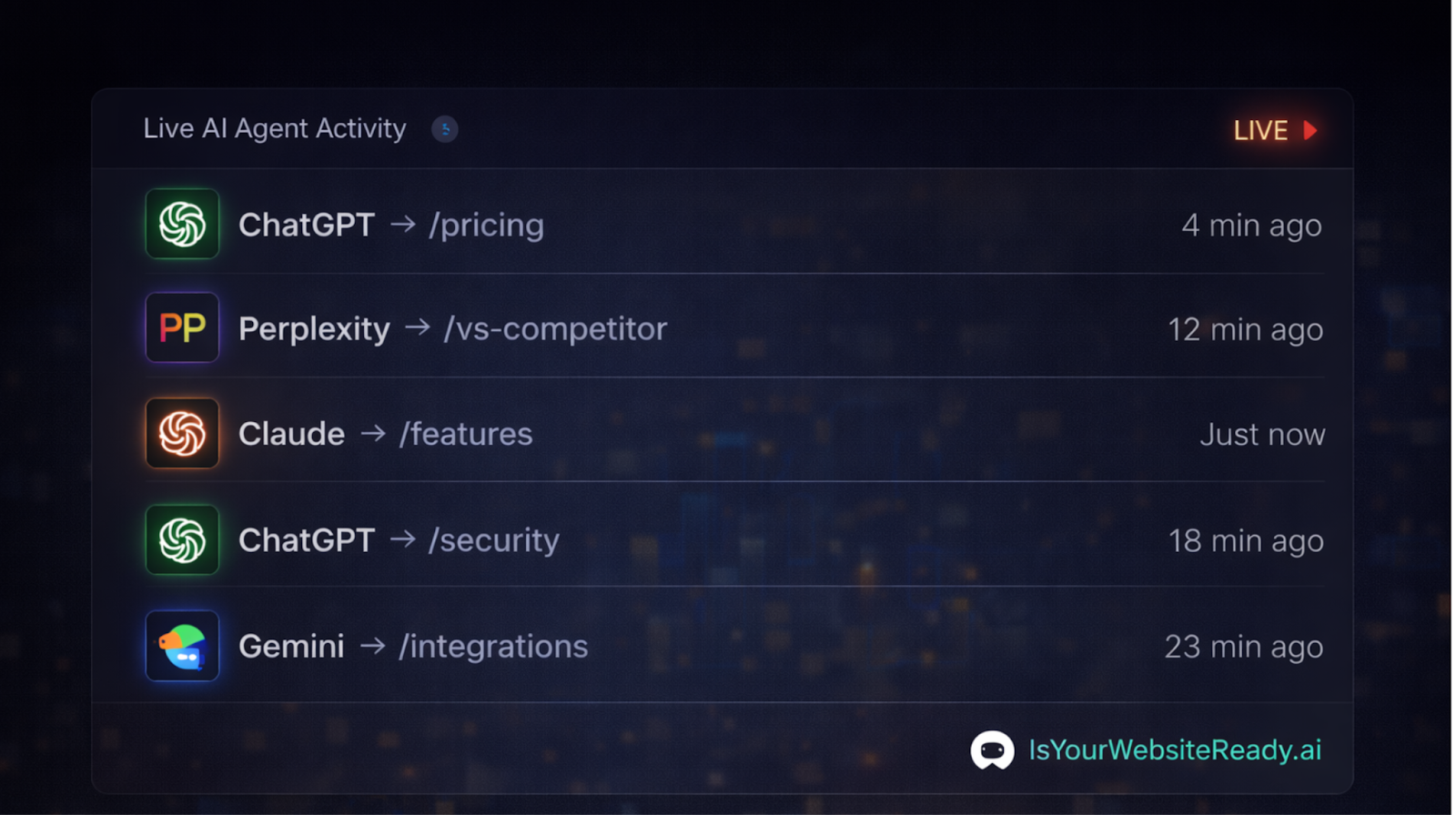
Your analytics won’t show it. Agent Analytics does. Free.
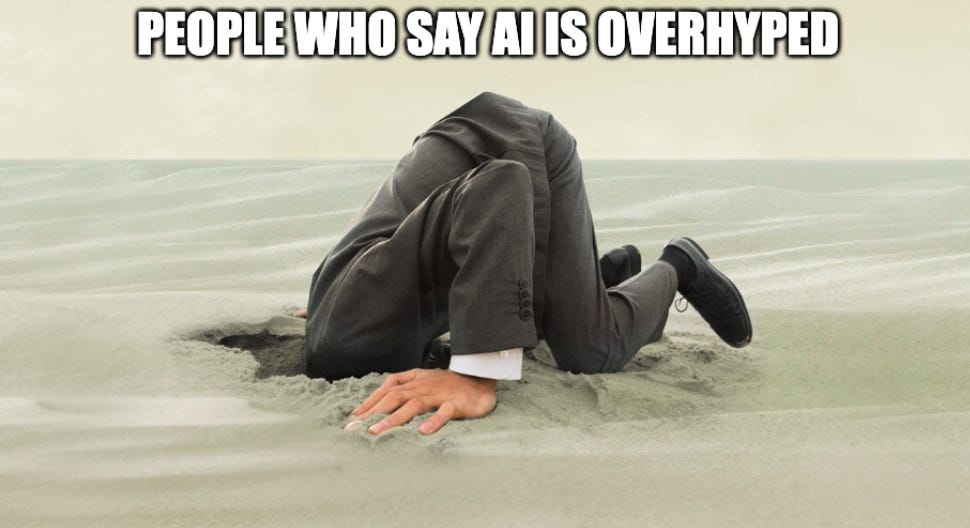
Get your head out of the sand
A lot of people’s response to AI right now is critique. Pointing out where it fails. Where it’s wrong. Why it’s overhyped. Screening for em-dashes. Every new model drop turns into a race to prove what it can’t do.
I get it. If something threatens your role, tearing it down feels like self-defense.
But that fear only makes sense if the current setup is worth protecting. And watching this play out, it feels like people are desperately defending a system that was already failing them. Meetings instead of making. Process instead of progress. “Work about work” that creates no value.
AI is not just automating tasks. It’s removing permission. You no longer need to wait for headcount, budget, or alignment to create something real. That’s why companies are nervous. A motivated individual with curiosity and initiative can now do what used to require a team.
This is why there’s a window right now.
Early adopters are compounding advantage. They’re learning faster, shipping faster, and building confidence faster. Once AI-native workflows become the default, that edge disappears. Right now, curiosity beats credentials. But that won’t last when AI skill becomes commoditized.
I’ve spent years writing about this stuff. About how full-time employment stability is a myth - were you 100% safe from layoffs, even before AI? About how tying your identity to your job title is a trap. How the leadership ladder has a dark side that pulls people away from work they actually love and into meetings, politics, and people management they hate. How I quit full-time roles to build career optionality - how owning your skills, your reputation, and your ability to create value independently is the real security. And how I literally want to eliminate my own job, because so much of Growth has been stagnating and I think AI could free us up to do better, more creative work.
Things you should do this week
First, lock in and try to vibe-code a rough version of your own company’s product. Block a few hours (using Lovable, obvi, LOL). No perfection. Just see how far you get.
Don’t start with edge cases or scale. Start with the core thing your product actually does. Most companies have two or three workflows that matter and a long tail of noise wrapped around them. Focus on those. See if your users can create their own personal tools solving for that workflow.
If AI gets you uncomfortably far in a single day, that’s a signal for you of what’s to come.
Second, make AI your default for everything. AI should be your starting point for everything: writing, thinking, designing, coding, planning.
The culture around this is backwards. We spend so much time shaming people for not deleting them em dashes... Oh how wrong we are here. The real question now is why someone didn’t use AI in the first place.
Manually doing work that AI can do better, faster, and cheaper isn’t craftsmanship. It’s wasted time. And in a world where leverage compounds weekly, wasting time is the most expensive mistake you can make.
Third, if AI couldn’t do something yesterday, try it again next week. AI improves in weeks, not years. Once AI began writing its own code to improve itself, the pace of capability growth went exponential. “We tried that and it didn’t work” is the fastest way to fall behind.
Fourth, start a side project. Not because you’re quitting tomorrow, but because building is the fastest way to internalize what’s changing. The tools are cheap or free. The barrier to entry is gone. Maybe you can even make money from it.
Fifth, ask the AI-native person around you for help. They’re waiting to show you. This stuff is contagious once you see it. Don’t do this:

Stop reading. Start shipping.
No one wants to lose their job. That fear is real. People depend on your income. I’m not dismissing that. But ask yourself honestly: do you love your job so much that you want it frozen exactly as it is? Do you want your kids to have it?
You need a job. But do you need this one, in this form, forever?
What if this moment isn’t about falling behind, but about finally getting unstuck?
The biggest risk right now isn’t AI taking your job. It’s watching other people pull ahead while you wait to feel ready.
So stop scrolling. Open Claude, ChatGPT, Cursor, or Lovable. Try something. It doesn’t have to be perfect. It doesn’t have to be big.
Just start.
Edited by Jonathan Yagel.
As a growth designer I used AI mostly as a supporting tool ChatGPT for copy, ideas.
I never seriously believed I could build and ship something independently without developers.
But a few days ago, I decided to experiment. I used Cursor to build my own portfolio website from scratch. Two evenings later it was live.
That experience genuinely shifted my mindset.
Really powerful article.
I’ve spent the last year rebuilding how I work around AI. I built a functional app with Lovable in a week, something I wouldn’t have believed was realistic six months ago. That was a bit of a moment.
What’s strange is I feel more capable than ever, but less legible to the market. I’m a systems-oriented PM building operational platforms for internal teams, and AI massively amplifies that skillset. But hiring still filters for logos and titles first.
How do you make AI-native, operational product work legible in a CV-scanning world?